In this issue:
- Budget details coming into focus
- New Auditor General appointed
- Partisan imbalance in bills continuing
- Meeting with Livingston County Farm Bureau
Budget details coming into focus
Last month we heard Governor Pritzker’s proposed budget for the upcoming fiscal year which begins on July 1. Now that some time has passed, legislators and the public have had time to dig into some of the details of the proposed numbers. While the Governor acknowledged that revenue is going to be tighter this year, he seems to have once again proposed to charge ahead with even more spending, and yet another tax increase to try to cover it.
The Governor’s proposed budget increases spending by almost $1 billion compared to last year. He proposes $728 million in new taxes, fees and revenue increases to pay for it.
This follows a pattern: since taking office Governor Pritzker has increased annual state spending by more than $16 billion. If you add it all up, Illinoisans are paying an average of $1434 more per person in taxes since Governor Pritzker took office.
On top of the tax increases, the Governor proposes to cut millions from the Local Government Distributive Fund (LGDF). Local governments were promised 10% of certain state tax revenues through LGDF, but lately that figure has been closer to 6%. The Governor proposes cutting it even further, meaning our local governments could have to raise property taxes even more just to make up the difference. The Governor’s speech had nothing to say about property tax reforms or reductions.
State spending has grown faster under Governor Pritzker than the rate of inflation, and more than under the previous four governors.
So far, we are not off to a good start in this year’s budget making process.
New Auditor General appointed
Illinois will soon have a new Auditor General. The nonpartisan position, which is appointed by the legislature following the recommendation of the Legislative Audit Commission, oversees audits of the obligation, receipt and use of public funds of the state of Illinois. The Auditor General can also be directed by the General Assembly to make additional reports and investigations as needed.
Last week the House and Senate voted overwhelmingly in support of current Illinois Finance Authority executive director Chris Meister to take up the new role. The current Auditor General, Frank Mautino, is retiring following the end of his ten-year term. Auditors General are appointed to such long terms in order keep their work as independent as possible by removing the office from the usual two-year political cycle.
Partisan imbalance in bills continuing
There is a perception among the public that members of the Illinois House of Representatives come to Springfield, present their ideas for bills, and debate them among their colleagues who then vote whether to pass the bills. The truth is much more frustrating.
The first step in the legislative process after a bill is filed is for the House Rules Committee to refer it to the appropriate substantive committee for a hearing. These substantive committees are the panels which deal with specific issues like agriculture, education, energy, public safety and much more. But if the Rules Committee never assigns the bill to a substantive committee, or drags its feet in doing so, the bill is unlikely to get a fair hearing before the deadline to advance it out of committee – a deadline which falls at the end of this month. The Rules committee chairperson determines which bills move, and a majority vote of the three Democrats and two Republicans is required to let the bill out of Rules.
This process is ripe for partisan game-playing, and sadly we are seeing it happen this year. Roughly 1600 bills have been filed since the start of this year. Two-thirds of them are still sitting in the Rules Committee awaiting action. But it gets worse.
Of the 542 bills which have been released from Rules, 503 of them have Democrat sponsors, while only 39 are Republican sponsored. That means that only seven percent of the bills allowed to see the light of day have Republican sponsors. This process has been used to choke off bills for ethics reform, tax relief, public safety and much more. It is being used in the same way once again this year. There are only seven session days remaining before the deadline.
We were elected to come to Springfield and work for the people of our districts, not to see our bills stashed away, never to even get a fair hearing. This process must change.
Meeting with Livingston County Farm Bureau
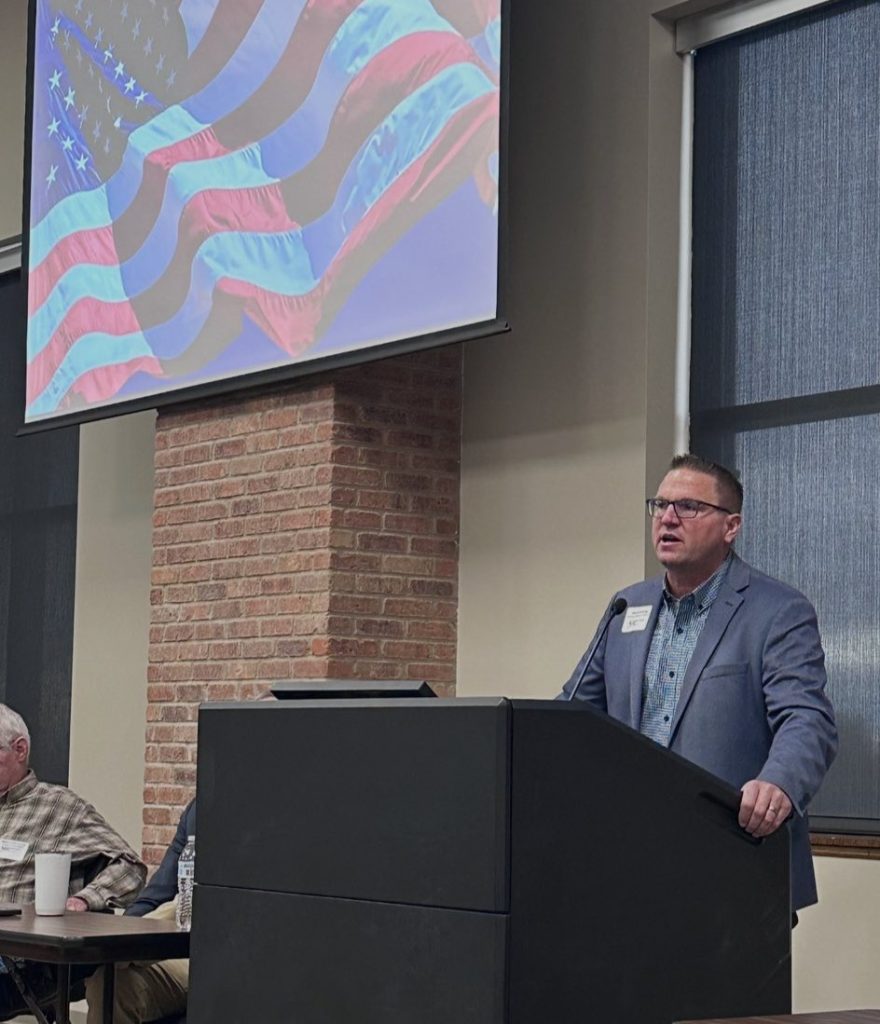
We had a great time at the Livingston County Farm Bureau’s Annual Legislative Breakfast this week!
Thank you to the Farm Bureau team for hosting such an engaging event. It’s always a valuable opportunity to connect with local farmers, community leaders and fellow legislators to discuss the issues that matter most to our agricultural community.
We appreciate your continued leadership and advocacy for Livingston County agriculture!
Our current bill backlog
When a vendor provides the state with goods and services, they submit the bill to the Illinois Comptroller for payment. The Comptroller processes the paperwork and pays the bill when funds are available in the state’s checking account. Currently the total amount of unpaid bills is $2,613,860,584. This figure changes daily. Last year at this time the state had $2.3 billion in bills awaiting payment. This only includes bills submitted to the Comptroller for payment, not unfunded debts like the state’s pension liability, which is well over $100 billion.
Illinois headlines
Former ComEd exec-turned-FBI mole in Madigan probe sentenced to probation
It’s Severe Weather Preparedness Week
Illinois diversity commissioner did not properly disclose $23K side job
IDPH urges CO detector use as report highlights exposure risks